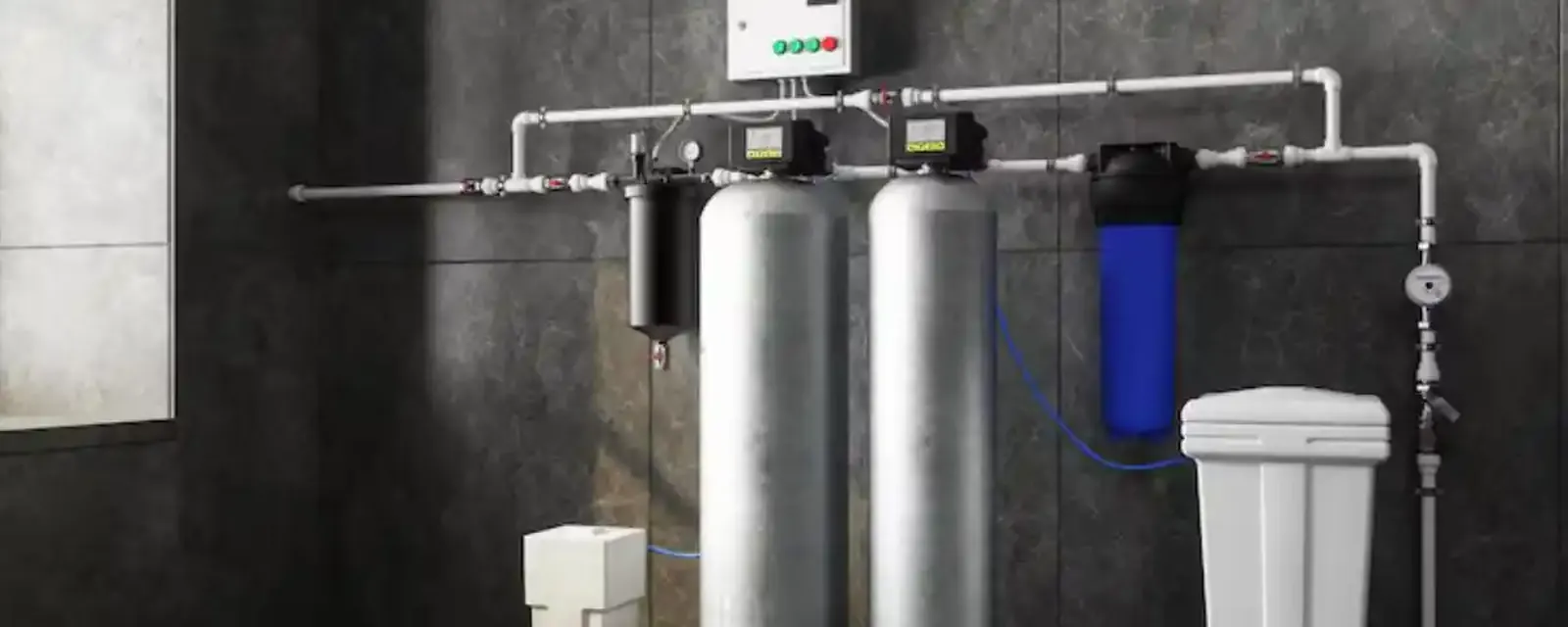
A water softener swaps hardness minerals for sodium or potassium so scale stops forming on fixtures, in water heaters and inside appliances. Whether it is worth buying depends on how hard your water is and how much trouble hardness is causing. We cannot name a price without knowing both, but we can show you what goes into it.
What you pay for
| Cost | What it covers | How it varies |
|---|---|---|
| Equipment | Resin tank, brine tank and control head | Capacity and features differ widely. |
| Installation | Plumbing connections, bypass and drain | Location and pipe material. |
| Drain and power | Discharge for regeneration water, outlet | Distance and what exists. |
| Permit, if required | City review | Depends on the scope. |
| Salt | Refills for the brine tank | Hardness and household size. |
| Service | Occasional valve or resin work | Age and water quality. |
Test before you buy
Your water's hardness drives the capacity you need, and a softener that is too big or too small wastes money. A home test kit or a lab test gives a number in grains per gallon. Compare it with the water quality report from your utility. Our water softener page walks through options, including filters and reverse osmosis, which do different jobs.
Thinking about a softener?
Call and ask how to test your water first.
Sizing
Capacity is based on household size and hardness. A unit that is too small regenerates constantly and uses extra salt and water. One that is too large may leave water sitting in the resin too long. A plumber calculates this from your numbers rather than from a guess.
Ongoing costs people forget
- Salt or potassium refills, which vary with hardness and water use.
- Water used in each regeneration cycle.
- Electricity for the control head.
- Occasional resin cleaning or replacement after many years.
- Disposal of regeneration brine, which some areas restrict.
Alternatives
A salt-free conditioner changes how scale forms but does not remove hardness. A reverse osmosis system treats drinking water at one tap. A carbon filter improves taste and removes chlorine but will not stop scale. Which is right depends on what bothers you.
Where it goes
A softener usually installs near the main water line, in a garage or utility space with a drain and power nearby. In a condo with no such space, options narrow. Tell us the building type and we will say what is practical.
Salt, potassium and the water that goes down the drain
Most softeners use sodium chloride. Some homeowners choose potassium chloride, which costs more and is used by people who want to avoid added sodium. Either way, the softener flushes the brine out of the tank with water during regeneration, and that water goes down a drain.
That discharge is why some cities and agencies limit or discourage salt-based softeners in certain areas. Ask the City whether any such rule applies at your address before you buy, since an installation that has to be removed later is an expensive mistake.
Features that change the price
- Demand-initiated regeneration, which regenerates based on actual water use instead of a calendar and can save salt and water.
- Twin-tank designs that give soft water without interruption.
- Built-in bypass valves, which make maintenance easier.
- Wi-Fi monitoring, which some owners like and others find unnecessary.
- Higher capacity resin for large households or very hard water.
Is it worth the money?
The honest answer depends on what hardness is costing you. If you are replacing a water heater early, scrubbing scale off glass and replacing clogged fixtures, a softener can pay for itself over time. If your water is moderately hard and the scale is a cosmetic nuisance, a cheaper step such as descaling a tankless heater or flushing a tank may be enough.
Whatever you choose, get the numbers first. Test the water, size the system to the test, and ask how often the salt will need refilling. Our water softener page and tankless water heater page explain how hardness affects other equipment.
A simple way to compare quotes
| Ask about | Why it matters |
|---|---|
| Capacity in grains | Should match your hardness and household size. |
| Regeneration type | Demand-based units use less salt and water. |
| Bypass and plumbing | Determines how easy future service will be. |
| Drain connection | A wrong drain setup can cause leaks or backflow. |
| Warranty | Tank and control head are often covered separately. |
A quote that lists only a model name and a total hides most of what you need to know. Ask the contractor to write down the capacity, the regeneration method and what is included for plumbing and drain work.
Renting, leasing and portable exchange tanks
Some companies lease softeners or swap exchange tanks on a schedule. That can lower the upfront cost, and it adds a recurring fee. Compare the total over several years with the cost of owning a unit. Ask who is responsible for repairs and what happens at the end of the term.
Maintenance you can do yourself
Check the salt level every month or two and keep it above the water line in the brine tank. Break up any hard crust, called a salt bridge, with a broom handle. Use salt pellets rather than rock salt, which leaves more residue. If the water stops feeling soft, check the bypass valve before you call, because it is sometimes left open after a repair.
What the numbers say about Monterey Park water
The City of Monterey Park supplies most of the community with water from local groundwater wells, and its 2010 water quality report listed total hardness around 12 grains per gallon, with a range of 4 to 24. That range is wide, so your tap could be softer or harder than the average. A small number of addresses are served by private water companies, which publish their own reports.
Before you buy, ask the City's Water Division for its current water quality report or test your tap. Discharge of regeneration brine to the sewer can be regulated in some areas, so ask the City whether any rules apply to a softener at your address.
Questions about water softener costs in Monterey Park
It depends on your hardness and how much scale you see. Test your tap first.
It depends on hardness and household size. A properly sized unit uses less.
Some homeowners do, but connections, bypass and drain need care. A leak can do real damage.
They do different things. They reduce scale buildup but do not soften the water.
Ask the City of Monterey Park's building department about your installation.
Sources and where to confirm
Local facts and rules on this page rest on the City's 2010 water quality report, the Water Division, the building department and the California Plumbing Code. Confirm anything that affects your own property with the source.
- City of Monterey Park Water Division, water quality report (2010 edition cited here). Ask the Water Division for the current report.
- City of Monterey Park Water Division, for questions about your meter, billing and the utility side of the line.
- City of Monterey Park building department, plumbing permit requirements, including water heater replacement.
- California Plumbing Code (the state's adoption of the Uniform Plumbing Code, UPC), enforced locally by each city's building department.