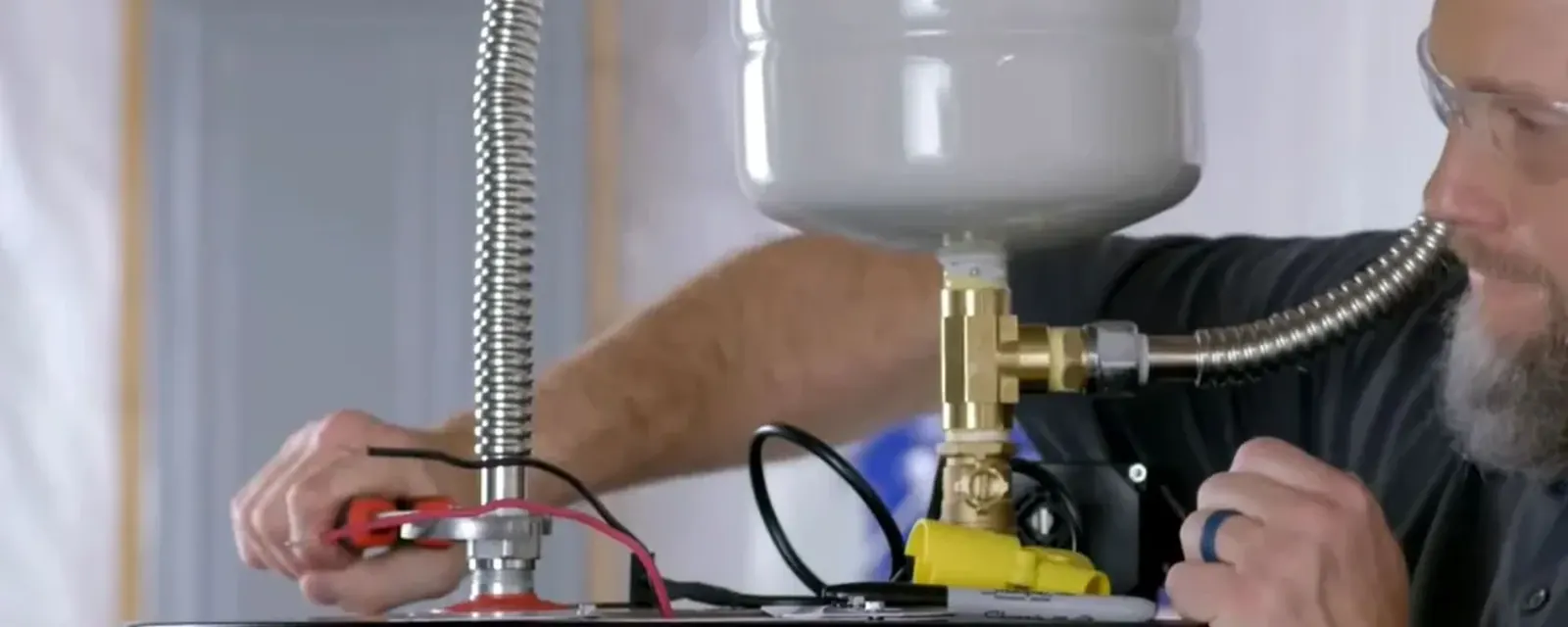
A tank water heater is a steel vessel under constant pressure, heated and cooled thousands of times. Eventually the lining and the metal wear out. The question is not whether to replace it but when, and whether to do it on your schedule or the heater's.
Signs it may be time
Age
Many tanks last around a decade. Past that, failure risk rises.
Rust-colored hot water
Rust from the tank, not the pipes, means the inside is corroding.
Rumbling or popping
Sediment baked onto the bottom of the tank.
Moisture at the base
A damp tank bottom or rust streaks near the seams.
Not enough hot water
A failing element or burner, or a tank full of sediment.
Rising energy bills
Scale makes the heater work harder to heat the same water.
Find the age
The serial number on the label usually encodes the manufacture date. The format varies by brand, but the first letters and digits typically show the month and year. If you cannot decode it, send the label to a plumber and we can read it for you.
Heater showing its age?
Call and read us the serial number on the label.
Repair or replace
| Finding | Lean toward repair | Lean toward replace |
|---|---|---|
| Age | Under about 8 years | Around a decade or more. |
| Leak source | Fitting or valve | Tank shell. |
| Repair cost | Small part | Close to the cost of a new unit. |
| Hot water supply | Adequate | Constantly short. |
| Rust in the water | Not present | Coming from the tank. |
Our water heater repair page explains the common fixes. When replacement makes sense, water heater replacement describes the visit and the choices.
Maintenance that buys time
- Flush the tank once a year to remove sediment.
- Check the anode rod every few years, since it sacrifices itself to protect the tank.
- Test the relief valve gently and watch for drips.
- Keep the thermostat at a sensible temperature.
- Make sure a drain pan and strapping are in place.
Planned swap versus emergency swap
A planned replacement lets you choose the model, schedule the work and compare prices. An emergency replacement gives you fewer choices and a wet floor. If your heater is old, show any of the signs above and sits in a place where a leak would do damage, replacing it on your terms is cheaper than waiting for it to decide for you.
What a failing heater sounds, looks and smells like
| Clue | What it suggests |
|---|---|
| Popping or rumbling when it heats | Sediment hardened on the bottom of the tank. |
| Metallic smell or tint in hot water | Corrosion inside the tank. |
| Water pooling at the base | A leaking fitting, or a failing tank. |
| Pilot that keeps going out | A weak thermocouple, a draft or a failing gas valve. |
| Lukewarm water only | A failed heating element, or a thermostat problem. |
| Hot water that runs out quickly | A dip tube that has failed or heavy sediment. |
Think about location and risk
Where the heater sits changes how long you should wait. A tank in a garage with a floor drain does little damage if it leaks. A tank in an attic or a closet above finished space can do thousands of dollars of damage in an afternoon. If your heater is old and sits above living space, replacing it early is cheap insurance.
A drain pan with a pipe to a safe location, and a leak sensor on the floor nearby, reduce the damage from an unexpected failure. They do not replace the heater, but they buy time.
Choosing what comes next
When replacement is on the table, think about what you want from the next heater. A same-size tank is the simplest swap. A tankless unit saves floor space and ends the problem of running out, at a higher installation cost. A heat pump model uses less energy but needs clearance and a drain.
We walk through these choices on our water heater installation and tankless water heater pages, and the plumber will talk through your household's needs before recommending one.
What to do the day you decide
- Take a photo of the label with the model and serial number.
- Note the fuel type, the tank size and where the unit sits.
- Measure the space and the door or stairs the new unit will need to pass.
- Decide whether you want to keep the same size or change capacity or type.
- Call and describe all of it, so the plumber can bring the right unit.
Having that information ready shortens the visit and keeps the price from creeping up. If the old heater has already started to leak, shut off the water and power or gas first, then call our 24/7 line.
Flushing: how and how often
To flush a tank, turn off power or gas, close the cold supply and attach a hose to the drain valve. Open a hot tap upstairs to let air in and drain the tank to a safe spot. When the water runs clear, close the valve and refill. If the drain valve is plastic and stuck, stop and call a plumber, since forcing it can break the valve. Many manufacturers recommend flushing about once a year.
Water heaters and Monterey Park water
The City of Monterey Park lists water heater replacement as work that requires a plumbing permit, so budget for that step and ask the building department what it involves. A permitted installation also leaves a record that helps at resale.
The City's water comes mostly from local groundwater, and its 2010 water quality report listed total hardness around 12 grains per gallon with a range of 4 to 24. Hard water leaves sediment in a tank faster, so an annual flush matters more here than in soft-water areas. Ask the Water Division for its current report to see whether that still holds.
Questions about water heater replacement timing in Monterey Park
Many last around a decade, give or take, depending on water and maintenance.
If the rust comes from the heater and not the pipes, it often is.
It can help if the tank is not too far gone.
If it is old and sits above living space, yes, replacing it on your schedule is safer.
The City lists water heater replacement as requiring a plumbing permit. Ask the building department for details.
Sources and where to confirm
Local facts and rules on this page rest on the City's 2010 water quality report, the Water Division, the building department and the California Plumbing Code. Confirm anything that affects your own property with the source.
- City of Monterey Park Water Division, water quality report (2010 edition cited here). Ask the Water Division for the current report.
- City of Monterey Park Water Division, for questions about your meter, billing and the utility side of the line.
- City of Monterey Park building department, plumbing permit requirements, including water heater replacement.
- California Plumbing Code (the state's adoption of the Uniform Plumbing Code, UPC), enforced locally by each city's building department.